
Your argument deserves more than a clean sentence.
Reviewers don't reject papers for grammar.
They reject work whose contribution is buried, whose positioning is unconvincing, whose claims don't survive a deeply critical reading.
For twenty years I've helped scholars in business research make their work legible to the people who decide whether it gets published — working with the argument, the field it speaks to, and the person writing it.
Editing was never about the words.
A fluent paragraph is easy to produce now. No sweat with all the tools we have. But what continues to be hard is knowing whether your contribution is actually a contribution, whether the sentences carrying your claim can bear the weight you've put on them, whether the changes you made to your paper were adequate for the level of revision required for a round 3 submission, or whether the motivation for your manuscript is clear as day. That level of judgment is the work I bring to your manuscript. It sits upstream of the prose, and it comes from two decades of reading manuscripts inside scholarly conversations rather than from smoothing text into something that merely sounds correct.
When I edit, I am asking the questions your reviewers will ask before they ask them. Where is the contribution, and is it framed as one? Does the theory earn its place, or is it decoration? Has the author entered an existing conversation, or have they treated the literature review as a pièce rapportée? These are matters of scholarly judgment, and they decide whether a paper gets published far more often than any question of style.
“You might have just saved my PhD. You are not only editing for people, you are delivering hope that there is a path to the goal.”
WHO YOU’LL BE WORKING WITH

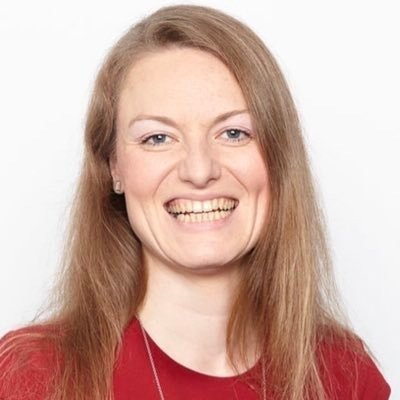
Hi! I’m Tanvi Mehta
For over twenty years I've worked as an academic editor for business scholarly writing, helping authors sharpen their contributions and place their work in the journals that matter to their careers. I've taught in doctoral programmes, trained faculty, and have sat with the same manuscripts your reviewers will read. My work is close, candid, and built on a real understanding of your field — because a paper succeeds or fails on whether its argument is clear and convincing, and that's a judgment I've spent a career refining.
Four things a tool can't give you.
i
Judgment about the argument
I read for arguments and claims and whether your structure supports them. Most papers that struggle in review struggle because the contribution is unclear, the positioning is weak, or the argument has a gap the author can't see from the inside. I find those things and help you fix them.
iii
An editor who knows your voice
Over a working relationship I come to understand how you think and what you're trying to do, so the edits sharpen your argument rather than flatten it into house style. Your paper should still sound like you, only clearer and more sure of itself.
ii
A field, not a generic standard
Twenty years inside business scholarship. I know these journals, the expectations of their reviewers, and the unwritten rules of the conversation your paper has to enter. That specificity is what makes writing right for this submission to this journal.
iv
A partner through a hard process
Publishing is slow, lonely, and often brutal. Having someone in your corner who understands both the craft and the stakes, who will tell you the hard truth about a draft and then help you act on it, changes the experience and the outcome.
WHY A HUMAN EDITOR STILL MATTERS
Fluency was never the problem.
You can generate clean text in seconds now, and many academics do. Clear text, though, does not change what happens at the journal. The problem is the contribution being unclear, indefensible, and positioned where reviewers cannot recognise its value, and that requires someone who understands your field and is willing to tell you when the argument isn’t working.
A tool can give you confident and clear prose but no view on whether your idea is sound. I give you a reader who has spent a career learning to tell the difference, who remembers your project from one draft to the next, and whose own reputation rides on your work reaching publication. That is a relationship, and it's the part of this work that cannot be automated.
Look closely, they never praise the proofreading.
-
![Jochen Schweitzer profile picture]()
“We were awarded the best PhD paper award. This is due to your editing work. Reviewers acknowledged the readability of the paper.”
Jochen Schweitzer
Associate Professor, UTS, Australia -
![Pilar Rajas Gaviria profile picture]()
“Your work in helping me craft my story makes my writing clear, insightful AND enjoyable. Your energy is inspiring and I love your sincere and refreshing viewpoint on my work.”
Pilar Rojas Gaviria
Associate Professor, University of Birmingham -
![Bart Lariviere profile picture]()
“The way you present your ideas in a paper matters. I am very grateful to Ms Mehta. I value her many critical reflections, and our discussions afterwards. She is a real expert.”
Bart Larivière
Professor, Ghent University -
![Dana Malcova profile picture]()
"You might have just saved my PhD. You are not only teaching people and editing for them - you are also delivering hope that there is a path to the goal."
Dana Malcova
PhD student, Prague School of Economics and Business
20+
Years of Experience
200+
Clients Worldwide
300+
Faculty Trained
WAYS TO WORK WITH ME
Three ways in.
one-to-one
Editorial Partnership
Close work on your manuscript, from a single difficult section to a full paper. The focus is on the argument and its readiness for review.
group
Courses & Workshops
The frameworks behind the work, taught so you can apply judgment to your own writing. Built on linguistics, rhetoric, and the craft of scholarly storytelling.
in-person, Bali
Writing Retreats
Time, focus, and the company of other scholars, away from everything pulling at your attention. The next retreat takes place in Ubud, Bali.
Big Ideas,
Real Impact.
Driven by curiosity and built on purpose, this is where bold thinking meets thoughtful execution. Let’s create something meaningful together.
Popular

2025
New York
The Atlast Project →
“Communication was top-notch and the final outcome was even better than we imagined. A great experience all around.”
Former CustomerGet In Touch
If you're interested in working with us, complete the form with a few details about your project. We'll review your message and get back to you within 48 hours.